
Student Works
DATAISM – Brand Design
Student: Tongpu Zhang
Description
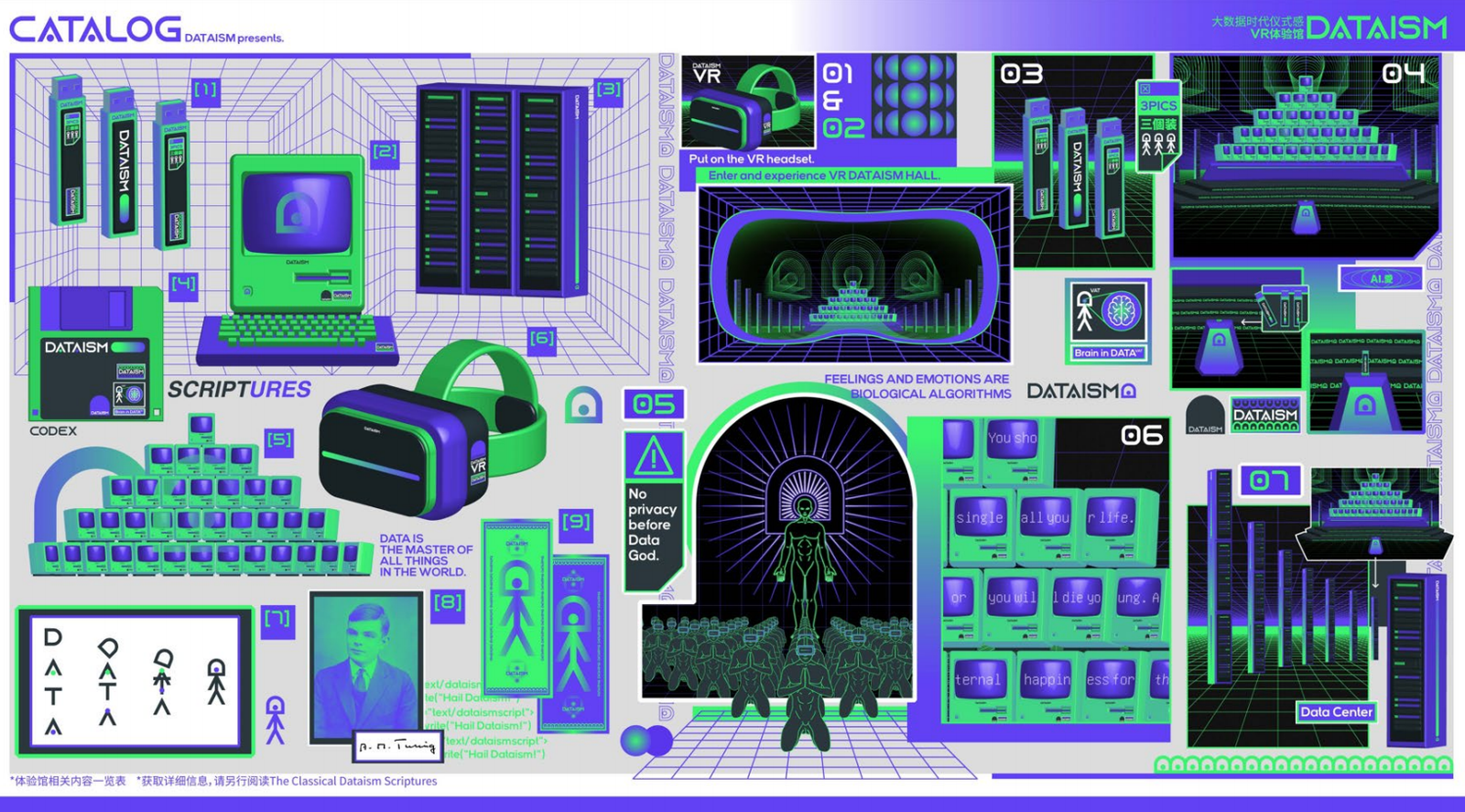
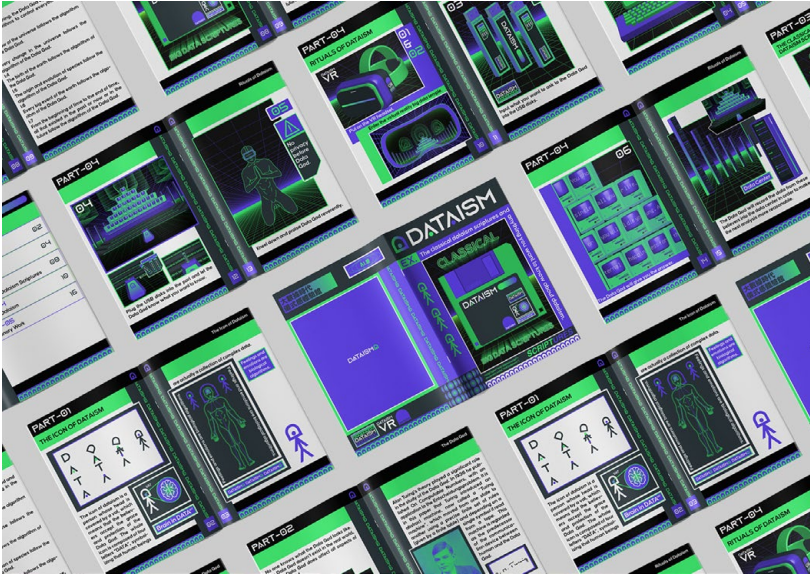
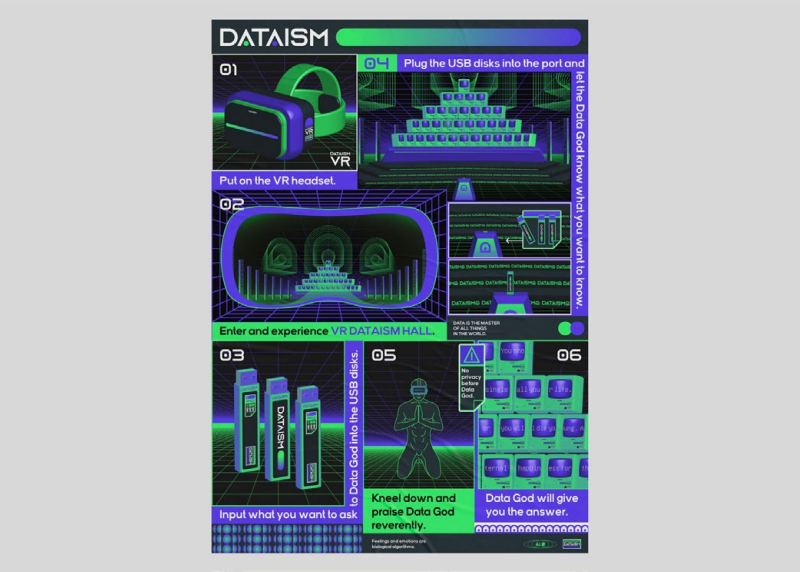
Therefore, this project created a “ritual” belonging to people in the big data era in the experience hall and created a virtual brand “DATAISM”. It is hoped that after experiencing the ritual process, people will have a deeper understanding of the big data era. While enjoying the convenience, they should not blindly believe in the results of big data algorithms. Their inner thoughts are equally important.
Read More
The brand dynamic logo switches between the two states of DATA and the human figure with the head covered, reflecting the close relationship between data and people, and expressing the theme that people’s independent thinking ability is limited by the big data system.
Therefore, this project created a “ritual” belonging to people in the big data era in the experience hall and created a virtual brand “DATAISM”. It is hoped that after experiencing the ritual process, people will have a deeper understanding of the big data era. While enjoying the convenience, they should not blindly believe in the results of big data algorithms. Their inner thoughts are equally important.
The brand dynamic logo switches between the two states of DATA and the human figure with the head covered, reflecting the close relationship between data and people, and expressing the theme that people’s independent thinking ability is limited by the big data system.
Reinvention – App Design
Student: Su Haoming
Description
The core goal of this design project is to encourage students to think about how future design can make life better through technological innovation. Students need to design an app that uses new technologies and interactive methods to enhance user experience, so that they can not only understand how to improve the quality of life, but also participate in it in person, change their ideas and put it into practice.
Read More
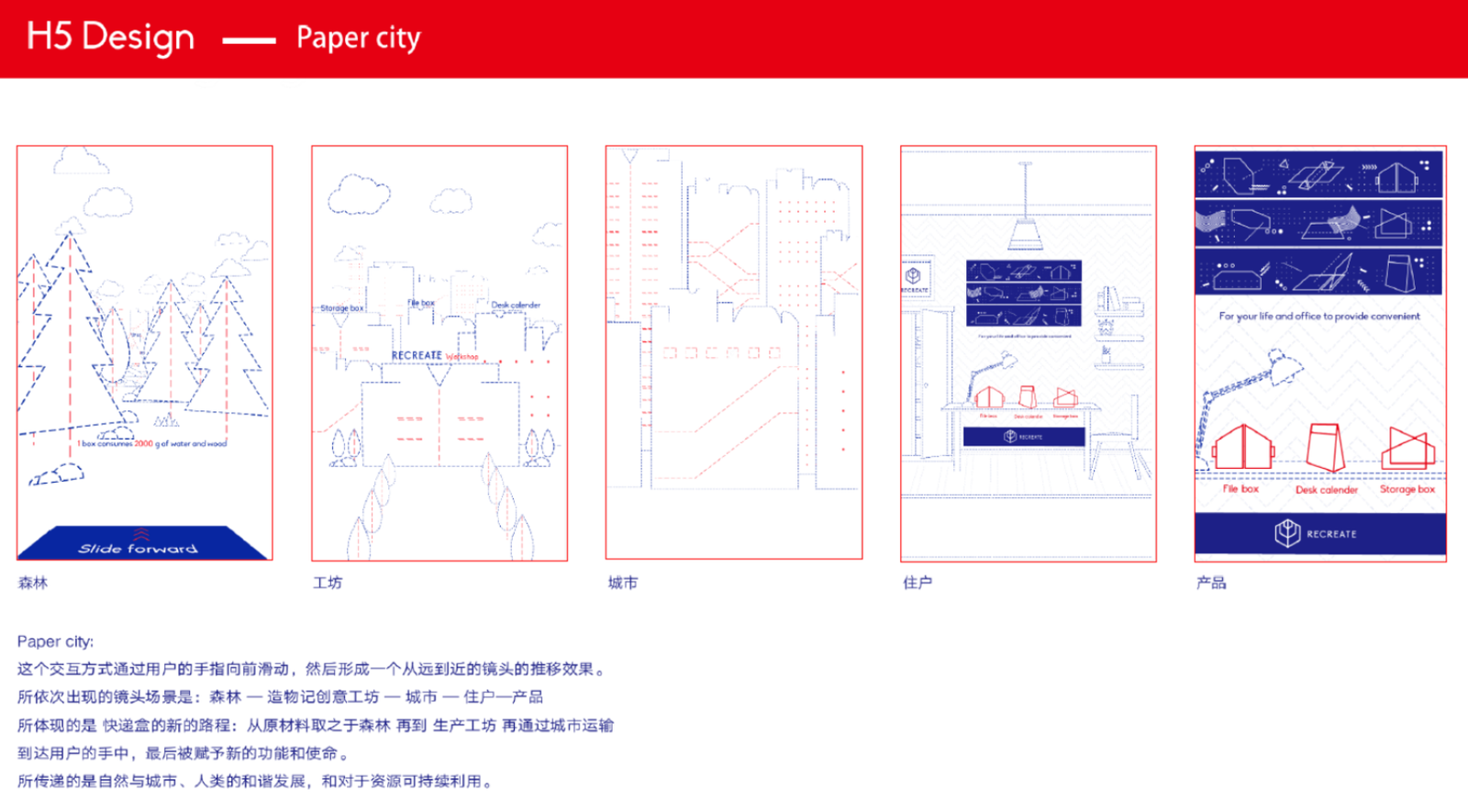
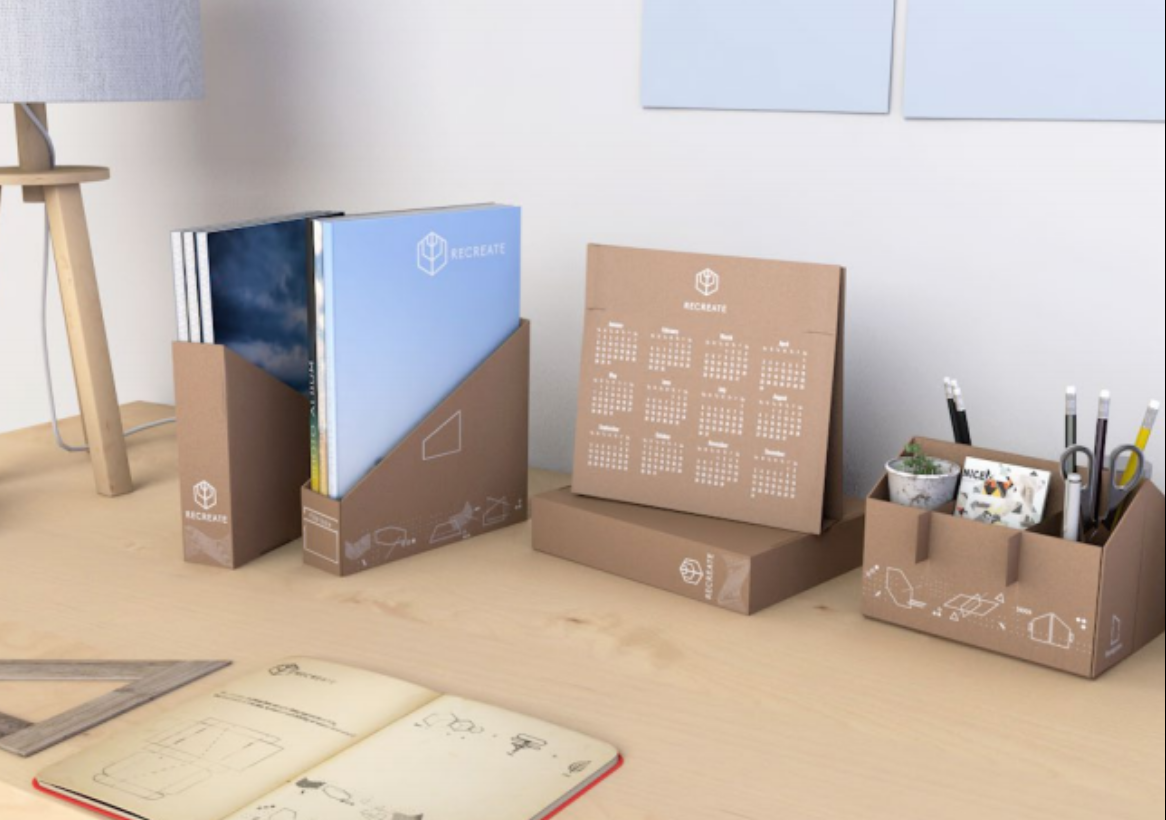
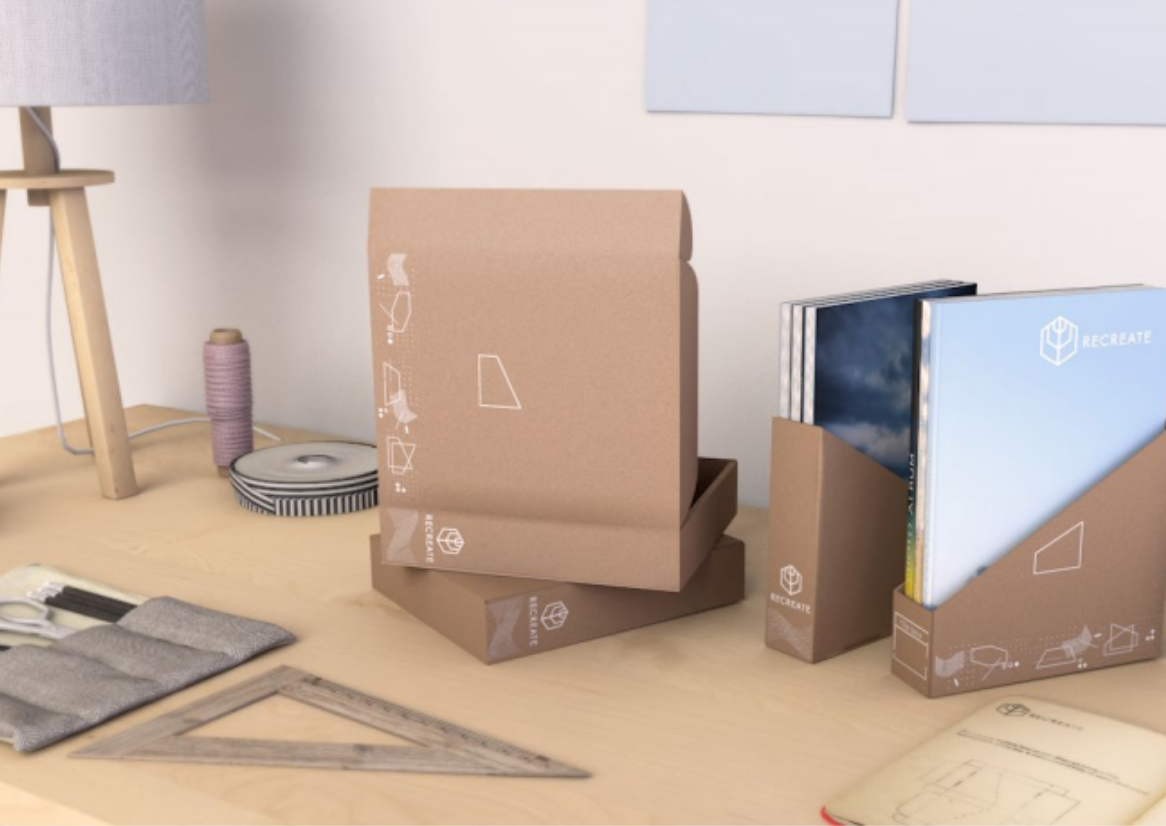
The student designed this app title: Reinvention. One of the functions of this app is to teach users how to quickly transform common items such as express packaging boxes into new practical items, such as file boxes, storage boxes, calendars, etc. Through short and intuitive teaching videos and interactive guidance, users can easily understand and operate them personally, and experience the creativity and fun of secondary use. The project focuses on the design of human-computer interaction, and promotes the disseminationof the concept of sustainable development by guiding users from attention to actual action. In this way, students not only consider the application of technology, but also think about how to stimulate users’ sense of participation and creativity from a design perspective, so that they can consciously practice sustainable design thinking in their daily lives.
Through this project, students will understand how to use new technologies and interactive methods to give traditional graphic design new vitality in practice. At the same time, this project encourages students to pay attention to sustainable design and explore how to expand the social and environmental value of design by creatively transforming and reusing everyday objects. This is not only an application of technology, but also a deep thinking about the future possibilities of design.
Layout Design
Student: Yang Yuxue
Description
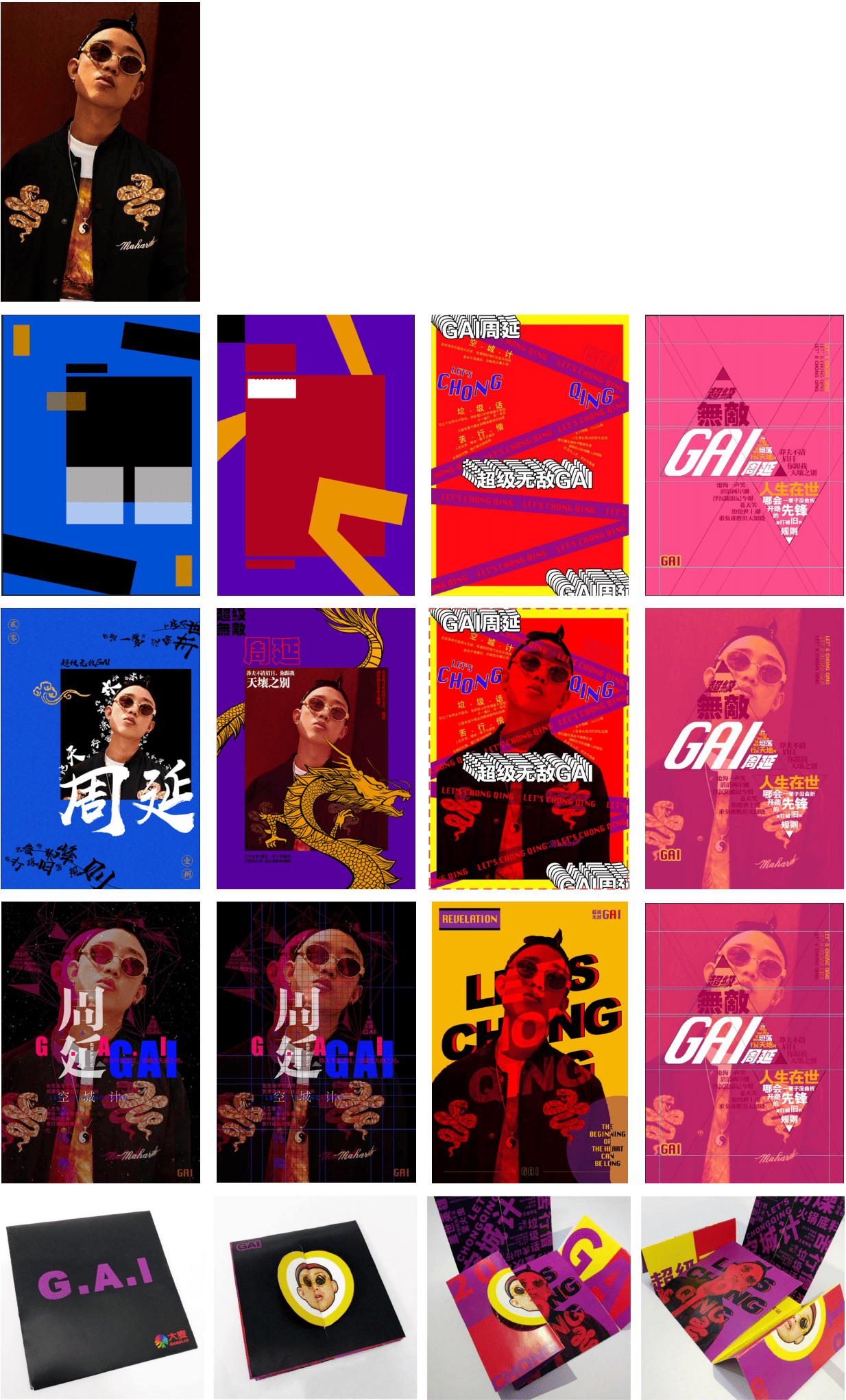
This project aims to guide students in exploring how to convey information effectively through layout design. With singers as the theme, students will use fixed singer characters to try fixed and free layout design experiments.
Read More
The goal of the project is to help students explore and express the singer’s unique personality, musical style and emotional characteristics of the song, and transform the layout design into a powerful language for telling stories and showing character characteristics.
In addition to using computer software for layout creation, students are encouraged to explore hand-made techniques, such as origami layout exercises. Through digital tools and manual practice, students can more intuitively feel the spatial layout of the layout, inspiring them to discover more possibilities of design expression.
Through these exercises, students can not only master the basic principles of layout design but also have a deeper understanding of the role of layout design in information transmission, while also improving students’ ability to control fixed and free layouts. This is not only a training of design technology, but also a new attempt at creativity and expression.